Ask most people what an Egypt trip looks like and you'll get roughly the same answer: the Giza pyramids, the Sphinx, maybe a Nile cruise between Luxor and Aswan. It's a genuinely extraordinary circuit and there's a reason it's the standard itinerary. It's also only a slice of the country.
A coastline built for something other than sunbathing
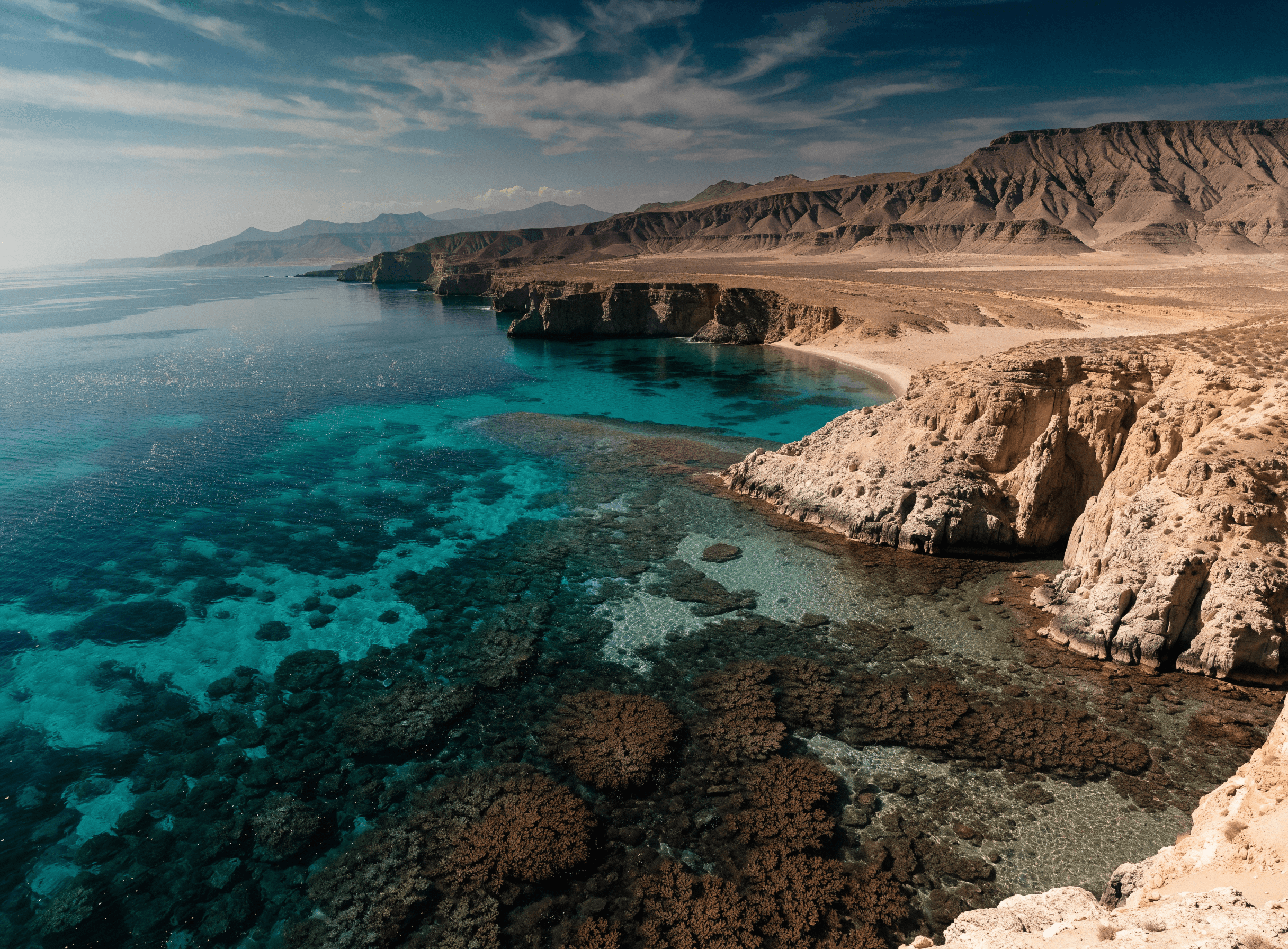
The Red Sea coast is usually sold as a beach-resort add-on to the ancient-sites trip. What gets less attention is the marine environment just offshore — protected reserves like Ras Mohammed National Park at the southern tip of the Sinai Peninsula, where coral reef drops almost straight down into deep blue water a short swim from the shore. It's some of the most accessible reef diving and snorkelling anywhere in the world, and it barely features in the standard "pyramids and cruise" itinerary at all.
The pyramids get you to Egypt. The reef is the part that convinces you to come back.
A market that isn't built for visitors
Outside Cairo, markets like Birqash's camel market operate much as they have for a long time — a genuinely working trade market, not a staged experience. It's a legitimate and, for many, uncomfortable window into a different economy and way of life, and it deserves to be approached with real respect: for the people trading there, and for the animals involved. This isn't a photo-opportunity attraction, and we don't think it should be treated like one.
A note on this section: the practical details of visiting responsibly — timing, access, and how to do it in a way that's respectful rather than voyeuristic — need proper local research before we'd confidently send travellers there. [CONFIRM WITH SOFIA / RESEARCH REQUIRED] before this becomes part of any Dauntless itinerary.
The point
Egypt's ancient sites earned their fame honestly. But the country's coastline and its working, unpolished corners are where you find the parts almost nobody photographs — which, as usual, is exactly where the more interesting version of a place tends to be hiding.