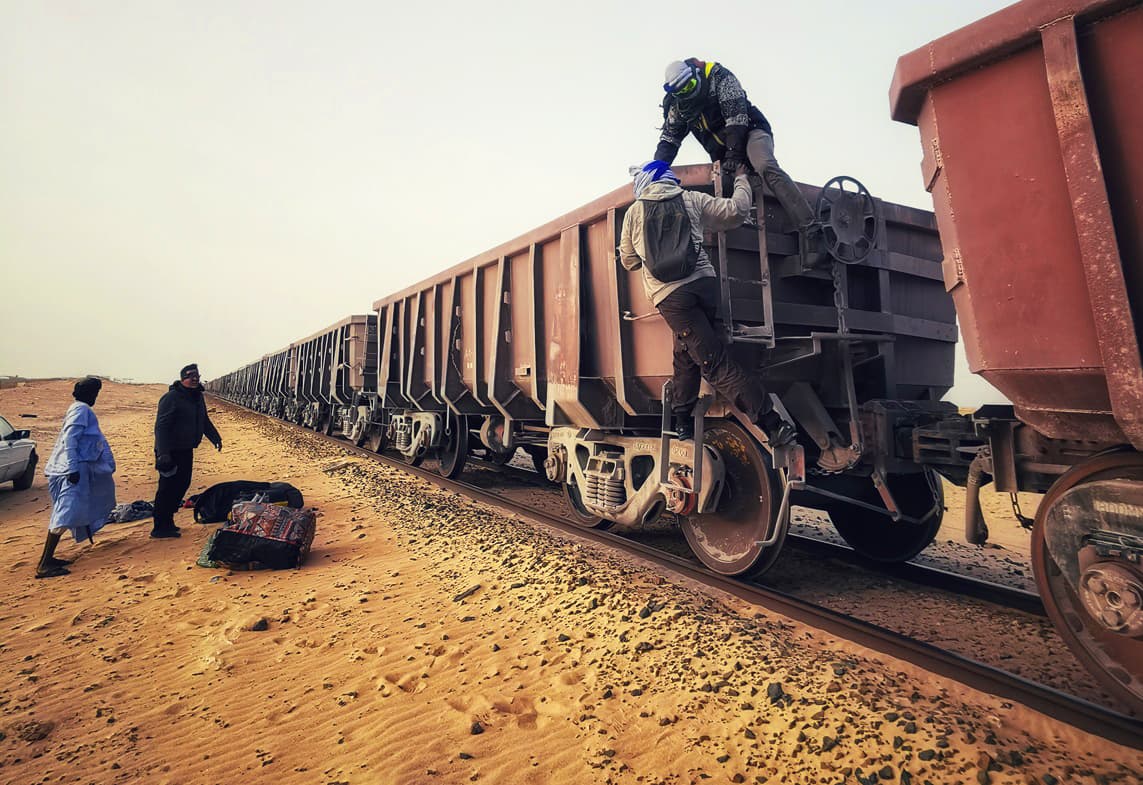
There's a moment, somewhere in the dark, when the train stops being a novelty and starts being real. No lights. No platform. No announcement. Just two and a half kilometres of iron ore wagons stretching further than you can see in either direction, and the sudden understanding that you're about to spend the night on top of one of them.
Mauritania doesn't advertise itself. It doesn't have a tourist board slogan, a viral photo spot, or a Netflix documentary. Most people who've heard of it at all know it for one thing: a freight train that happens to also carry passengers, hauling iron ore roughly 700 kilometres across the Sahara from the mines near Zouérat to the port at Nouadhibou. Nobody built it for travellers. That's exactly the point.
Scale you can't photograph
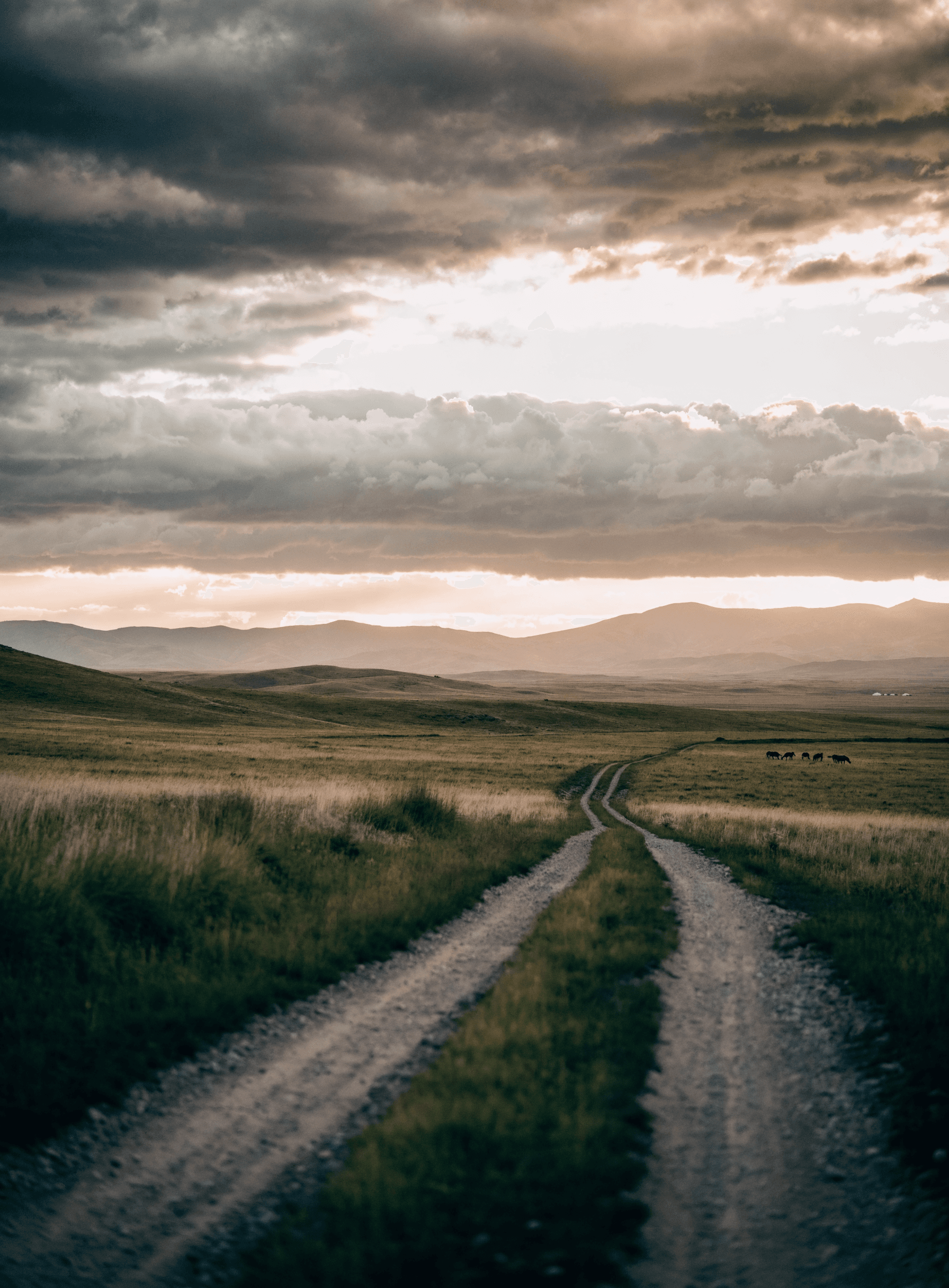
You can describe the Sahara in numbers — millions of square kilometres, temperatures that swing 30 degrees between noon and midnight, dunes that move — and none of it prepares you for actually being in it. The desert here isn't a backdrop. It's the whole experience. Roads (where they exist) run for hours without a single building. The horizon doesn't really end; it just gets hazier.
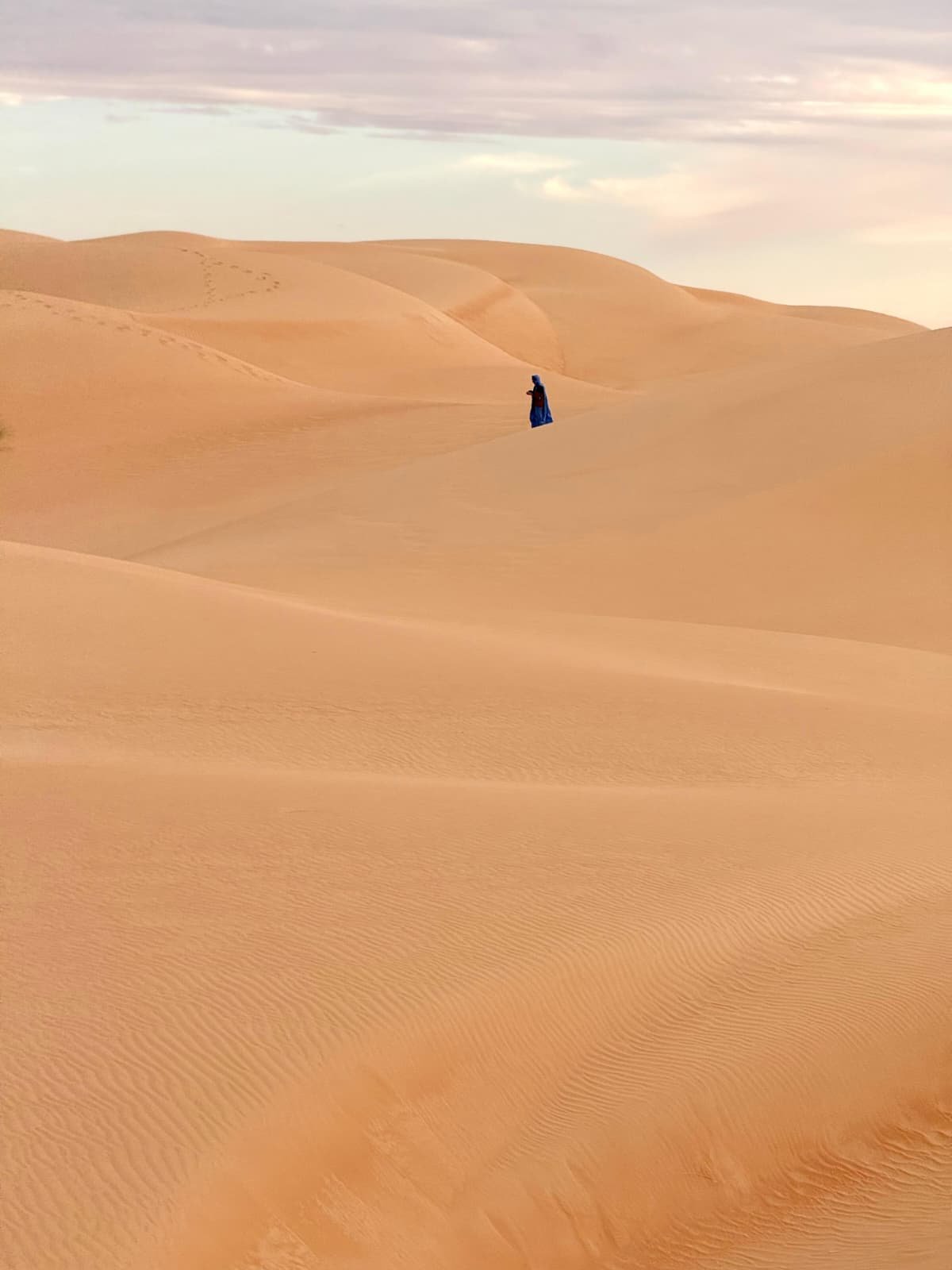
That scale is what makes the Iron Train make sense. You're not riding it to get somewhere faster — the drive would probably beat it. You're riding it because it's the only way to actually feel the distance instead of just covering it.
The destination was incredible — but somewhere in the desert, in the dark, on top of a wagon of iron ore, it stopped being about the destination at all.
What the train is actually like
Let's be honest about it: it's not comfortable. There are no seats, because it isn't built for people. You climb up onto the ore itself, wedge yourself in somehow, and brace for a ride that can last ten or more hours, often starting at an hour of the night nobody would call reasonable. The wind picks up dust that gets into everything — your hair, your food, your camera. By sunrise, everyone on the train looks the same shade of rust-red.
And then the sun actually comes up over the Sahara, from on top of a moving train, and every bit of discomfort becomes the story you'll tell for years.
Why this became the first Dauntless trip
This is where Dauntless started — not as a business plan, but as a realisation on that exact train, surrounded by people from completely different parts of the world who'd been strangers three days earlier. The destination was the draw. The group was what made it unforgettable.
Mauritania isn't a place you visit to relax. It's a place you visit to find out what you're actually capable of sitting through, and to come home with a story that doesn't sound entirely believable — which, if you ask us, is the whole point of travelling in the first place.
Want to experience it?
Discover the Iron Train Expedition →